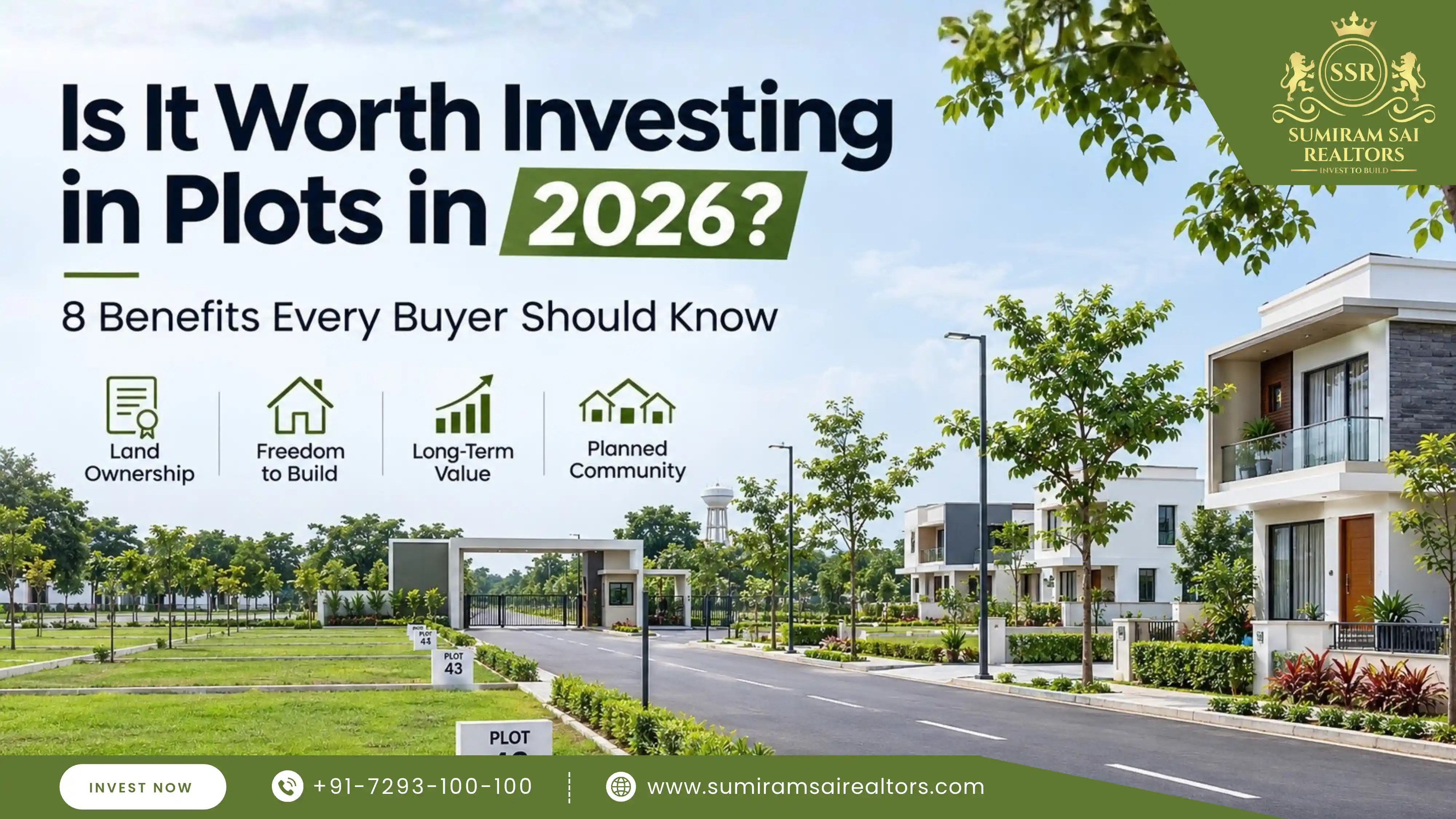
Is It Worth Investing in Plots in 2026? 8 Benefits Every Buyer Should Know
In 2026, a quiet shift is reshaping how families think about property. Apartments once ruled the market, but today more buyers ask a simple question: why pay for walls you did not design? Land offers something different. It gives control, flexibility, and a connection to a place you can shape yourself. When you search for plots near me in growing corridors, you will find options that did not exist five years ago.
Gated townships, freehold parcels, and villa-ready land now appear in tier-2 cities and leisure belts across India. The question is no longer whether land matters. The real question is whether 2026 is the right year to invest in plots. This blog guide explains eight benefits every buyer should know, with clear facts and no confusing jargon.
Why Land Ownership Feels Different in 2026
Buyers today want more than a flat on the tenth floor. They want a stake in the ground. Freehold plots near me give that stake outright, with no lease renewal dates and no permission needed to sell or build. That sense of permanence appeals to young families and retirees alike. Moreover, infrastructure spending has changed the map. Highways now reduce travel time to once-distant towns.
The Delhi–Dehradun highway, for example, has pushed expected price growth of 15 to 25 per cent in connected belts. When roads improve, land values follow. That pattern is repeating around Mumbai, Bengaluru, and the National Capital Region. The result is a market where land no longer lies at the edge of the conversation. It sits at the center.
1. Land Does Not Age Like a Building
A flat loses value as it ages. Paint fades, lifts break down, and plumbing needs replacement. Land does not suffer that fate. A plot holds its value because there is nothing to depreciate. The ground beneath a building may rise in price, while the building itself falls in worth. Plots near me skip that second part entirely.
This simple fact makes land attractive for long holding periods. Buyers who plan to invest in plots for ten or fifteen years avoid the wear-and-tear discount that drags on apartment resale. The land stays the same. Its location, however, may transform around it.
2. You Choose When to Build
A ready flat forces a timeline. You buy it, you move in, and you start paying maintenance from day one. A plot works differently. You buy the land, then wait if you wish. Some owners build within two years. Others hold the plot for a decade and build later. That flexibility suits families who may relocate for work or wait for children to finish school. Gated township plots add another layer: the developer handles roads, drainage, and security while you decide your construction schedule. You gain the security of a planned community without the pressure of an immediate build.
3. Freehold Ownership Removes Hidden Conditions
Leasehold property comes with a clock. The land belongs to someone else, and your rights end when the lease expires. Freehold plots near me carry no such limit. The owner holds absolute rights to use, sell, or pass the land to heirs. Banks prefer freehold titles because the ownership chain is cleaner. Resale becomes simpler too, since no third-party approval is needed. For buyers comparing options, freehold status is a decisive advantage. It turns a plot from a temporary arrangement into a permanent asset.
4. Gated Plots Blend Freedom with Security
Raw land often carries risks. Boundaries blur, title records confuse, and infrastructure lags. Gated plotted communities solve these problems. Developers verify titles, lay internal roads, install streetlights, and manage common areas. The buyer receives a clean parcel inside a secure layout. This model has moved from niche to mainstream. Industry data shows tier-2 cities now supply more than half of new plot inventory in India. Buyers want the freedom of land without the anxiety of unclear paperwork. Gated plots near me deliver both like The Hanudharaa and the Koru Ville township.
5. Villa-Ready Plots Open Rental Potential
A plot alone earns nothing until you build or sell. A villa on that plot changes the scenarios. Resort-themed townships near tourism corridors now offer managed rental programmes. The Koru Ville, for instance, sits near Jim Corbett National Park and allows owners to place their villas into a rental pool when they are away. The project team handles maintenance, security, and guest bookings. Rental income is not guaranteed, and terms vary by agreement. Nevertheless, the model provides plot owners a way to offset holding costs while keeping the land as a long-term asset.
6. Entry Prices Remain Lower Than Apartments
A plot in a growth corridor often costs less than a comparable flat in the city. That lower entry point matters for first-time buyers and mid-income families. You buy land today and build when savings allow. This staged approach spreads the cost over years. It also avoids the heavy home-loan burden that comes with a ready apartment. Plot loans typically cover 70 to 75 percent of land value, with interest rates may between 8.5 and 11 percent. Those terms are tighter than home loans, yet the lower base price keeps the overall outlay manageable.
7. Infrastructure Spending Creates Appreciation
Roads, airports, and industrial parks push land values upward. The pattern is visible across India. These gains do not happen everywhere. They cluster around funded corridors with real employment and tourism drivers. Buyers who invest in plots near such projects position themselves for growth that built property rarely matches. The Hanudharaa and the Koru Ville are such residential projects that are close to many proposed infrastructure projects.
8. Land Gives You Design Control
An apartment dictates your layout. You inherit the developer’s choices about room sizes, kitchen placement, and balcony direction. A plot in well-planned township like The Hanudharaa hands that control back. You hire your architect, choose your floor plan, and select finishes that suit your family. This freedom appeals to buyers who have lived in standardised housing for years. It also matters for multi-generation families who need specific arrangements, such as a ground-floor bedroom for elders or a separate entrance for grown children. The plot becomes a canvas, not a fixed product.
Understanding the Risks Before You Commit
Luxury apartments require proper maintenance, and owners pay for security and other living charges. Plot investment is risk-free. A plot earns value over time without paying any maintenance. Plot with villa also provides you monthly rental yield like the Koru Ville. However, title verification is critical, especially for standalone parcels outside gated projects. Buyers should check RERA registration, encumbrance certificates, and approved layout plans before paying any amount. Gated developments reduce some of these risks because investors find clear titles and detailed information on their investment. Read every clause about maintenance fees, construction timelines, and rental terms. A clear-eyed buyer makes a better investor.
The End Note
The decision to invest in plots in 2026 rests on a simple principle: land rewards patience and punishes haste. Buyers who verify titles, choose funded corridors, and plan for a five-year hold will position themselves well in the market. Freehold ownership avoids hidden conditions. Gated townships add security without sacrificing control. Villa-ready plots near tourism belts offer a path to rental offset, though no one should treat that income as certain. The market has changed since the apartment boom. More supply now sits in tier-2 cities, and buyers have noticed. They want space, flexibility, and a stake in something permanent. A plot delivers all three, provided you do the homework first. Visit the site, read the fine print, and ask challenging questions. Land gives back what you put into understanding it.
FAQs
Are plots near me a viable investment in 2026?
Yes, if you invest in plots near tourist attractions, funded infrastructure and employment hubs. Growth corridors around tier-2 cities show strong appreciation potential, though returns depend on holding period and title clarity.
What is the difference between freehold and leasehold plots?
Freehold means permanent ownership with full resale rights. Leasehold limits your rights to a fixed term, often 30 to 99 years, and may require permission for transfer.
Why are gated township plots gaining popularity?
They combine land ownership with managed infrastructure, security, and clear titles. Buyers avoid boundary disputes and receive planned roads, drainage, and common amenities.
Can I get a loan to invest in plots?
Yes, but plot loans usually cover 70 to 75 percent of value with shorter tenures and slightly higher interest than home loans. Composite loans covering land and construction offer better terms.
How long should I hold a plot before selling?
Most advisers suggest five to ten years to capture infrastructure-led appreciation. Short-term flipping carries higher risk and transaction costs.
What should I check before buying a plot?
Verify RERA registration, title documents, encumbrance certificates, approved layout plans, and road access. For gated projects, read maintenance terms and construction timelines.
Do villa plots near tourist areas earn rental income?
Some managed townships offer rental programmes, but income is not guaranteed. Treat rental returns as a partial offset, not the main reason to buy.
Is land better than a flat for long-term wealth?
Land avoids structural depreciation and offers design freedom. Flats provide rental income and easier liquidity. The better choice depends on your horizon and need for cash flow.
What is the minimum plot size available in gated communities?
Sizes vary by project. Some townships offer small plots of 111 square yards in the Koru Ville, while others start at 113 sq yards in The Hanudharaa.
How do I find trustworthy plots near me?
Start with RERA-registered projects like The Koru Ville, visit sites in person, speak to existing owners if possible, and have a local advocate review all documents before payment.