How Food Court Space for Sale at The Core Mall Works for Buyers
You buy the space. You do not run the food court. Rental is paid to you monthly, under the terms of your agreement.
Food court space for sale at The Core Mall is a buy-and-lease plan, not a restaurant business. You purchase a unit in the food court zone, the space is let to an operator and managed on your behalf, and the rental reaches you every month as set out in the agreement you sign. Nobody expects the buyer to cook, hire staff or stand behind a counter.
That makes it a very different product from a shop you stock yourself, and it calls for different questions. This page explains how the plan works, what your monthly rental depends on, which details are not in the brochure, and what to ask before you pay anything. Prices are left out on purpose, because they change and should come from a current written price list.
To request the price list, plan and draft agreement: use the enquiry form at thecoremall.org.
The Plan in Plain Terms
| Question | Short answer |
|---|---|
| What are you buying? | A unit in the food court zone of The Core Mall |
| Do you run the food court? | No. The plan is built around buying the space and receiving rental |
| Who handles tenants and upkeep? | The project says a facility management team handles tenant onboarding, rent collection and maintenance |
| How is rental paid? | Monthly, according to the agreement. The amount, start date and duration come from the agreement |
| Where is the project? | Crossings Republik, Ghaziabad, at the township entry on NH-24 |
| Developer | Concept Capital Infra Projects Pvt. Ltd. |
| UP-RERA number | UPRERAPRJ9641 (verify on the official UP-RERA portal) |
The rental terms in this table are the plan as the sales team explains it. Public pages do not state the monthly amount, the lease length or the exact start date, so each of those needs to be read in your own agreement.
Who Runs the Food Court? Not You
People sometimes assume that buying food court space means opening an outlet. That is not how this plan is meant to work. You become the owner of the space. A tenant or operator trades from it, and a management team deals with the tenant side so that you do not have to.
The project's website says food court investments "remove operational hassles", and that its facility management team looks after tenant onboarding, rent collection and property maintenance. It does not name that team or say whether it belongs to the developer or to an outside company. That is worth asking about early, because the party collecting rent and managing your unit is a large part of what you are relying on.
Think of it the way you would think of a flat you let out through a property manager. You own the asset, someone else deals with the occupant, and your income depends on how well that arrangement is set up and how well the building performs.
How the Plan Works, Step by Step
- Choose the unit. Ask exactly where it sits on the food court level, its carpet area and its configuration. The project says food court units come in multiple space configurations but does not publish their sizes.
- Collect the paperwork before paying. Ask for the current price list, the payment schedule, the draft agreement and the RERA details.
- Read the agreement. It should name your unit, its area, the payment schedule, the handover date and the rental terms.
- Register your ownership. The project describes registry as open. Ask what stage that applies to, and make sure the sale deed is registered in your name.
- The space is leased and managed. Ask who the tenant is, when they start trading and who manages them.
- Receive rental monthly. Ask for the payment date, how it is paid and how tax deducted at source is handled.
- Rent changes over time. The project's website describes commercial leases with rent rising by fixed percentages every three years, but it gives no percentage and does not confirm this for food court units. Check your agreement.
- Hold or sell. You can hold the unit or sell it later. A buyer will want to see the lease and the rental record, so keep every document.
About The Core Mall
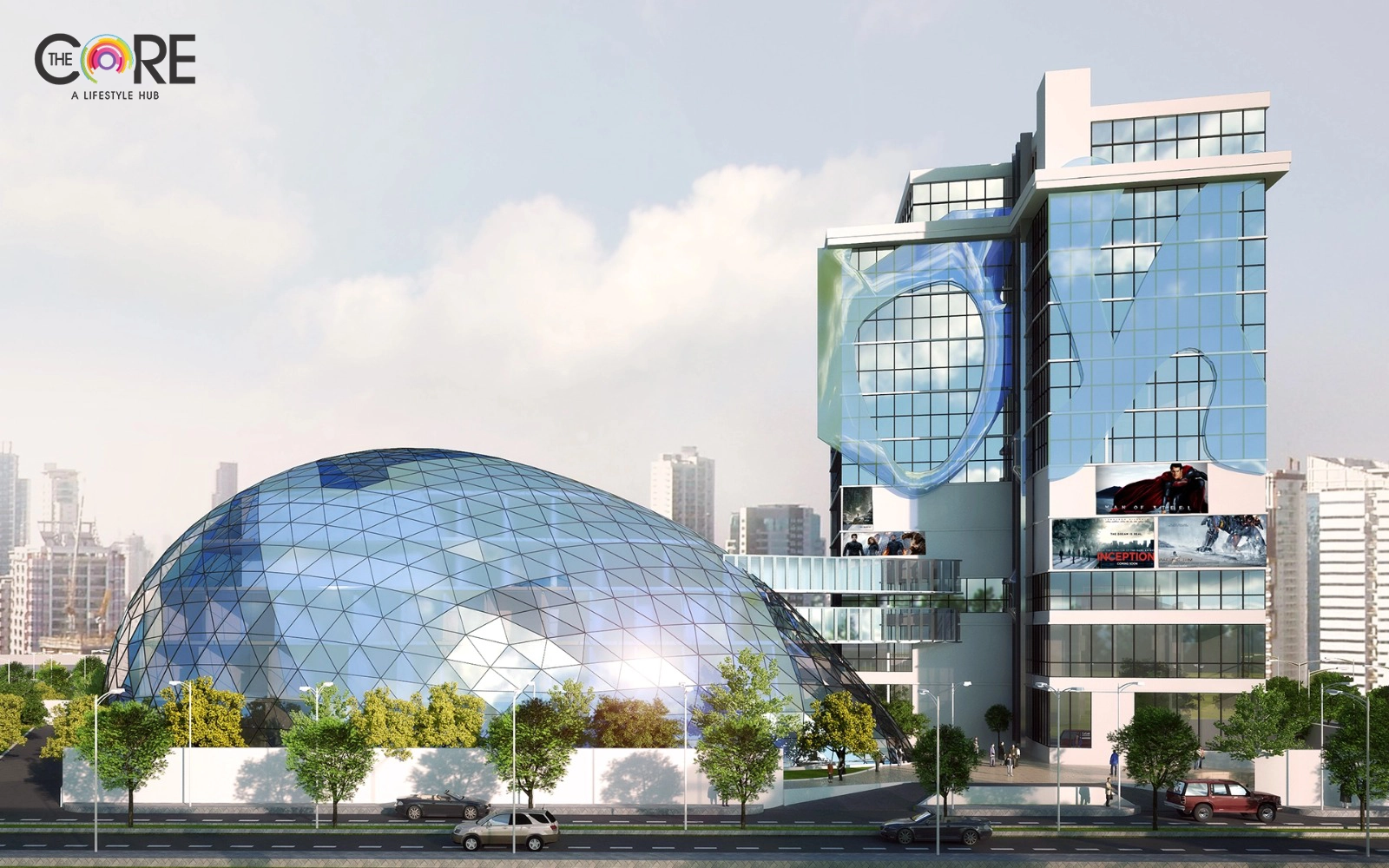
The Core Mall is a mixed-use commercial development at the entry of the Crossings Republik township on NH-24, which the project says is now referred to as NH-9 and the Delhi–Meerut Expressway. It describes retail shops, a food court zone, offices and studio apartments. The food court zone is described as a space for cafés, quick-service outlets, snack units and family dining.
The project quotes these approximate drive times, which change with traffic and roadworks:
| Destination | Approximate drive time |
|---|---|
| Raj Nagar Extension | About 15 minutes |
| Anand Vihar Railway Station | About 25 minutes |
| Akshardham, Delhi | About 30 minutes |
A metro line is described as upcoming, with no timeline, so it should not be part of anyone's reasoning today.
For a rental-based plan, location matters because it decides whether the food court fills with customers. A township entry on a highway can draw residents and passing traffic, but only a visit shows how much it does.
What Your Monthly Rental Depends On
The rental you receive rests on three things, and it helps to look at each on its own.
The agreement
Everything starts here. The agreement should state the amount of rental, the date it starts, how often and how it is paid, how long it runs, how it changes and what happens if something goes wrong. If a promise is not in the agreement, treat it as a conversation, not a commitment.
The party paying you
Ask who actually pays the rent. It could be an operator who has leased the space, a management company that collects from operators, or the developer for a set period. Each is a different kind of risk. If the payer is a developer or management company, ask whether the obligation is in the registered agreement, what happens after any fixed period ends and whether you have a direct claim against the operator.
The mall itself
Even a well-written agreement depends on the building. If visitors do not reach the food court, operators struggle, and a struggling operator is a rental risk for you. A mall with trading anchors, good parking and a lively food court gives the plan a healthier base than one still filling up.
No one can promise rent beyond what is signed and what the paying party can actually deliver. That is not a reason to avoid the plan. It is a reason to read it closely.
Questions to Ask About the Rental
| Question | Why it matters |
|---|---|
| When does rent start: at booking, at possession or when the operator opens? | This decides how long your money is committed before any rental arrives |
| What is the amount, how often is it paid and by what mode? | Get the figure and schedule in writing, not on a call |
| Who pays: the operator, a management company or the developer? | The payer's strength is what your income rests on |
| How long does the lease run, and is there a lock-in? | A short or loose lease means more vacancy risk |
| How does rent rise, and when? | Escalation clauses change what you receive over time |
| What happens if the operator leaves or stops paying? | The answer shows who carries the gap |
| Who bears vacancy between operators? | Some plans pass this on to the owner |
| What management or maintenance charges are deducted? | These reduce what reaches your bank account |
| Can the lease be changed without your consent? | You should not find a new rent figure you never agreed to |
| How is tax handled on the rental? | Income tax and, in some cases, GST can apply, so take advice from a chartered accountant |
Is It Built, and When Does Rent Begin?
This is the question that most affects your timeline, and public sources describe the status differently.
The project's website uses phrases such as "ready-to-move" and "Registry Open", and mentions an "Opening Soon" brand announcement without a completion date. A third-party property listing portal describes the project as under construction, with possession starting from March 2028. Both may be describing different parts, phases or dates, and neither settles it for your unit.
Settle it with documents. Open the project's page on the UP-RERA portal and read the stated completion date and the progress updates. Ask the sales team in writing which level the food court sits on, whether it is complete and when rental is expected to start. If you are buying into a unit that is not yet built, the delay terms in the agreement matter as much as the rental terms.
A Typical Timeline, Without the Numbers
It helps to picture the plan as a sequence, because money goes out at one end and rental comes in at the other, and the gap between them is where most misunderstandings live.
Before booking. You read the price list, the plan and the draft agreement, check the UP-RERA page and have an advocate review the papers. Nothing is paid yet, and nothing should be until the documents have been read.
Booking and payments. You pay according to the schedule in the agreement. For a unit that is still being built, payments are normally linked to construction stages. Ask which stage each payment is tied to, and keep a receipt for every one.
Handover or completion. For a completed unit, this is when you receive the unit's documents and registration. For an unfinished one, it is the date written in the agreement, which is why the delay clause matters.
The operator starts trading. The management team places an operator in the unit. Ask whether your rental begins now, or whether it began earlier under the terms of the plan.
Monthly rental. Rental arrives as the agreement describes. From here the questions change from "will it be built" to "is it being paid on time, and is the operator staying".
Lease renewal or a change of operator. At some point the lease ends or the operator leaves. Ask how that is handled, who finds the next operator and whether your rent is affected during the changeover.
The point of laying it out this way is that the longest uncertainty is often not the monthly rent itself, but the time before it starts and the time between operators.
Costs Beyond the Purchase Amount
The purchase figure is not the full cost. Ask for one written statement of everything.
- The base amount and exactly what it covers
- Stamp duty and registration charges, which are set by the state, so check the current rates with the sub-registrar
- GST, which can apply to under-construction commercial property, so confirm the position with a chartered accountant
- Common area maintenance and any sinking or corpus fund
- Management or collection charges under the plan
- Parking, if relevant
- Any fit-out that falls to the owner instead of the operator
Then work out what is left after those costs, not what the headline rent suggests.
Four Common Misunderstandings
"Pre-leased means rent starts on day one." A unit described as pre-leased may have a lease in place, but that lease could start on a later date, cover only part of the area or belong to a different level. The project's website uses the phrase "Pre-Leased Area" in its retail section and does not tie it to food court units. Ask for the lease that covers your unit.
"Registry open means the building is ready." Registry describes the legal step of registering a sale. It does not tell you whether the building is complete, whether an occupancy certificate exists or whether your unit is ready to be handed over.
"Monthly rental is the same as a return on my money." Rental is an amount received each month. A return depends on how much you paid in total, including taxes, registration and any costs that fall to you. Work out what you actually receive after all costs, then decide what that means for you. A figure on a brochure cannot do that calculation.
"A management team means the income is protected." A management team makes the plan convenient. It does not, on its own, make the rental certain. What protects you is what the agreement obliges and who is able to meet that obligation.
Honest Risks and Limits
A rental plan removes the daily work of running a food outlet. It does not remove risk, and a few points deserve plain language.
Vacancy is real. Units can sit empty between operators. Ask how the plan treats those months.
One mall, one location. Your income depends on a single building. If the mall underperforms, there is no second site to offset it.
Small commercial units are harder to sell than flats. The pool of buyers is narrower, and each wants to see the lease, the payer and the footfall before they agree.
Marketing and contracts are different things. Brochure language about returns, "pre-leased" areas or tenant lists is not a commitment. A proposed brand is an intention. A signed lease is a commitment.
Timelines can slip. For any unit that is not yet complete, plan for delays.
Returns from commercial property depend on market conditions and are never certain, and nothing on this page promises any.
Who This Plan May Suit
- Buyers who want exposure to commercial property without running a business, and who are comfortable that income depends on a lease and a mall.
- People who can hold for years, and who will not need to sell in a hurry.
- Buyers who read documents carefully and will take legal and financial advice before signing.
- Outstation and NRI buyers who want someone else to manage the unit, though they should confirm the rules that apply to them with their own advisers.
Who It May Not Suit
It is a weak fit for anyone who needs income to start immediately, who is stretching their budget to buy, or who wants to run their own outlet. It also suits people less who will not visit the site or read the agreement.
How It Compares With Other Ways to Hold Commercial Property
| Point | Food court space plan | Mall shop you lease out | Residential flat on rent |
|---|---|---|---|
| Who runs the business | An operator, not you | A tenant, not you | A tenant lives there |
| Who finds the tenant | The management team, per the plan | You or an agent | You or an agent |
| What drives income | The agreement and the mall's food court | The tenant and the shop's location | The local housing market |
| Main risk | Operator turnover and mall footfall | Vacancy and tenant quality | Vacancy and upkeep |
| Resale | Narrower pool, lease and record matter | Narrower pool | Wider pool |
None of these is automatically better. The right one depends on your budget, patience and appetite for risk.
Documents to Collect and What to Do on a Visit
Before you book, ask for:
- The UP-RERA registration details, matched against the promoter and project name
- The title documents and the sanctioned building plan
- The occupancy certificate for any completed portion, and fire safety clearances
- The draft agreement, including the full rental clause
- The management agreement, if there is one, and the identity of the operator
- A single written statement of all costs
On a visit, go on a weekday and a weekend, count how many people reach the food court level, check which outlets are trading today and which are only planned, and walk the entrances and parking. The project's own site advises confirming operating status and outlet timings before you travel, so call ahead.
Next Step
If The Core Mall is on your shortlist, start with a guided visit and your questions written down. Use the enquiry form at thecoremall.org to ask for the current price list, the plan terms and the draft agreement.
UP-RERA Registration No.: UPRERAPRJ9641. Project details, availability and terms are subject to change. Please verify all details with the project team and the official UP-RERA portal before making a decision. This page is general information and is not legal, tax, financial or investment advice. Real estate involves risk, and no returns are promised or implied.
FAQ SECTION
1. Do I have to run the food court myself?
No. The plan is built around buying the space and receiving rental, not operating an outlet. A tenant or operator trades from the unit and a management team handles tenant and upkeep matters.
2. How is the monthly rental paid?
According to your agreement. Ask for the amount, the payment date, the mode of payment and how tax deducted at source is treated, and get all of it in writing.
3. Is the rental guaranteed?
Rental is payable as set out in the agreement, and your protection is only as strong as the clauses and the party bound to pay. Read who pays, for how long, and what happens if the operator leaves. Nobody can promise more than the signed terms.
4. When does rent start?
That depends on the agreement. It could start from booking, possession or the operator's opening, and the difference can be months or years. Ask for the start date in writing.
5. Is The Core Mall ready, or still under construction?
Public sources differ. The project's website uses "ready-to-move" language, while a listing portal reports under construction with possession from March 2028. Check the UP-RERA portal and ask for the status of your unit in writing.
6. Is the same plan available at Mahagun Metro Mall?
The sales team explains that a buy-and-lease food court plan is also offered at Mahagun Metro Mall in Vaishali. It is a separate project with its own developer, status and terms, so compare the documents for each. See our Mahagun Metro Mall guide for that mall.
7. What documents should I ask for?
The UP-RERA details, title documents, sanctioned plan, the draft agreement with the rental clause, any management agreement, and a written statement of all costs. Have a local advocate read them.
8. Can I sell the unit later?
You can, but small commercial units usually have a narrower pool of buyers. A buyer will want the lease, the rental record and evidence of footfall, so keep your paperwork complete.